
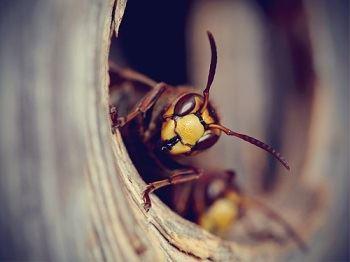
Wasps in Summer: Everything You Need to Know
As temperatures rise, wasps become increasingly active. Between June and September wasp nests reach their maximum size — sometimes with up to 10,000 individuals. Acting early is essential.
How to identify a wasp nest
Wasp nests are built from chewed paper (a mixture of wood fibres and saliva) and can be recognised by:
- A grey, papery ball shape — ranging from a tennis ball to a football in size
- Heavy insect traffic around a single entry point in a wall, eave or shed
- A loud buzzing sound near the nest
Dangerous locations
Be especially alert near:
| Location | Risk |
|---|---|
| Cavity wall | Hard to reach; large nest possible |
| Loft / attic | Warmth accelerates growth |
| Garden shed | Frequently entered → sting risk |
| Garden play equipment | Children at risk |
What to do when you find a nest
- Do not attempt removal yourself — amateur attempts frequently result in mass stinging
- Call a professional pest controller — we wear protective equipment and use the right products
- Keep bystanders away — especially anyone with a wasp allergy
Prevention is better than cure
- Keep bin lids firmly closed
- Avoid sweet drinks in open cups outdoors
- Inspect your eaves and shed corners every spring for small, new nests
Spotted a wasp nest? Call us immediately — we'll be there within 24 hours.