
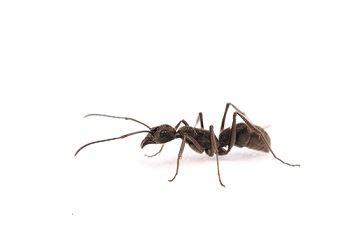
Controlling Ants: DIY or Call a Professional?
The Netherlands is home to dozens of ant species, but in dwellings it is mainly the black garden ant (Lasius niger) and the pharaoh ant (Monomorium pharaonis) that cause problems. The approach differs significantly between species.
Black garden ant
The black garden ant nests outdoors (under paving, in lawns) but ventures inside in search of food — particularly sweet foods.
Handling it yourself:
- Remove food residues and seal jars and containers properly
- Block entry points with silicone sealant
- Use ant bait (slower but destroys the nest)
Important: ant sprays only kill the foragers, not the queen. The colony survives.
Pharaoh ant
The pharaoh ant is smaller (2 mm), yellow-brown in colour and nests indoors — often in cavity walls or near heating. This is a serious infestation where self-treatment is counter-productive: aggressive intervention causes the colony to split and the problem spreads.
| Feature | Black garden ant | Pharaoh ant |
|---|---|---|
| Size | 4–5 mm | 1.5–2 mm |
| Colour | Black | Yellow-brown |
| Nest location | Outdoors | Indoors (warm) |
| DIY treatment | Possible | Not recommended |
When to call a professional
- You spot pharaoh ants (small, yellow-brown)
- The infestation keeps recurring despite your own efforts
- Nests are found in walls, floors or under underfloor heating
- The affected location is a business premises or healthcare setting
Professional approach
A certified pest controller uses:
- Species identification — critical to selecting the right method
- Gel bait stations — non-toxic bait that foragers carry back to the nest
- Follow-up checks — inspections at 2 and 4 weeks to verify colony elimination
For pharaoh ants: call us immediately. The wrong treatment makes the problem worse.